Installer Support and Resource CenterProject help for distributed-energy teams

IND-RE-01 · market pathways

Deye application pathways across distributed-energy projects

Residential, commercial-and-industrial, and utility-adjacent projects ask different questions about topology, documentation, monitoring, service access, and grid connection.

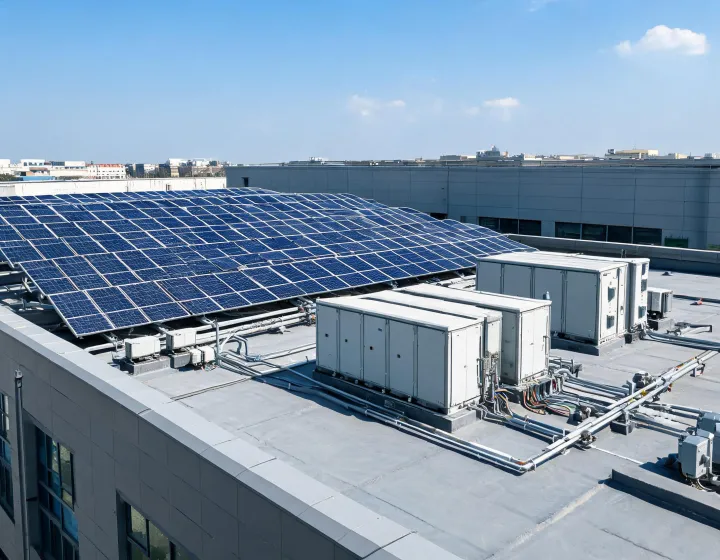
Solar and battery energy project across commercial buildings

Residential and small business

Review shading behavior, battery backup expectations, installer access, local interconnection rules, and the support route. Microinverter and string-inverter choices can change monitoring granularity and maintenance planning.

Commercial and industrial

Clarify load profile, tariff exposure, demand peaks, PV oversizing assumptions, and the commissioning boundary between PCS, EMS, and facility controls. A BESS should be sized for both power and dispatch duration.

EPC and distributed portfolio

Manage document revision, regional standards, spare-parts planning, SCADA interfaces, and handover consistency across sites. A repeatable evidence package reduces ambiguity between construction and operations teams.

Selection is a matrix, not a single rating

Electrical matrix

Compare MPPT voltage range, AC output constraints, anti-islanding behavior, and the actual grid-code requirements for the installed market.

Storage matrix

Consider battery chemistry, cycle life at defined depth of discharge, thermal behavior, usable capacity, and BMS compatibility as a combined set of constraints.

Operations matrix

Plan monitoring ownership, alert routing, replacement logistics, and the records needed to investigate a fault months after commissioning.

Map your application before naming equipment

Send the project’s region, power range, grid connection, and energy-storage objective for an evidence-led discussion.